
Last updated November 16, 2026
 Sweep & inspection
 Caps & crowns
 Flue relining
 Masonry repair
 Gas fireplace service
Level 1 sweep and inspection to the NFPA 211 annual standard - flue, crown, cap, and flashing checked and photographed
Chimney sweep logs do not sweep chimneys. They loosen some creosote - which then falls where a brush and vacuum still have to collect it.
DIY vs Professional Chimney Cleaning: The South Fulton Homeowner’s Decision Guide
The chimney sweep you can buy at a hardware store removes what you can reach. The problem is that the deposits most likely to cause a chimney fire don’t live where a brush can reach them. A homeowner with a drop cloth, a rod set, and an afternoon to spare can pull loose soot out of a firebox, and that’s real work worth doing. But stage-2 and stage-3 creosote – the tar-like and glazed forms that actually ignite – cling to flue walls in ways a standard brush pass won’t touch, and you often can’t see them from the opening at all. This guide walks through what DIY chimney cleaning genuinely handles, what it leaves behind, and how to decide which path makes sense for your home in South Fulton.
Quick Answer
For most South Fulton homeowners with a wood-burning fireplace or stove, professional cleaning is the safer choice because a certified sweep removes creosote a brush can’t and documents flue condition with a camera scan. DIY cleaning is reasonable only for light, recent soot in a flue you know is clean and sound. If you burn regularly, have never had the flue inspected, or notice glazed deposits, book a professional sweep.
Styles & brands we work with
- Sweep & inspection
- Caps & crowns
- Flue relining
- Masonry repair
- Gas fireplace service
Table of Contents
- What a Chimney Brush Actually Removes (and What It Leaves Behind)
- The Tools a Certified Sweep Uses That You Can’t Buy at a Hardware Store
- The Three Stages of Creosote and Why Only One Comes Off With a Brush
- The South Fulton Liability Question: Insurance, Documentation, and Self-Cleaning
- What Homeowners Can Safely Do Themselves
- The Break-Even Calculation: When DIY Saves Money and When It Doesn’t
- What a Professional Sweep and Inspection Actually Involves
- Why South Fulton Chimneys Age the Way They Do
What a Chimney Brush Actually Removes (and What It Leaves Behind)
A standard chimney brush does one job well: it knocks loose, dry soot and light powdery creosote off the flue walls so it can fall into the firebox or be vacuumed out. That’s the soot layer you see when you shine a light up the flue after a season of burning – grey, flaky, and easily dislodged. For a homeowner who burns occasionally and cleans every year, that layer is most of what’s there.
The problem starts when creosote has had time to cure. As flue gases cool on their way up, creosote deposits pass through stages. The first stage is that soft, flaky soot a brush will move. The second stage is a hardened, tar-like coating that adheres to the flue wall and resists a standard brush pass. The third stage is glazed creosote – a shiny, glassy, hard layer that forms when the deposits are repeatedly heated. A brush doesn’t remove stage-2 or stage-3 creosote. It skates over the top of it.
In our experience, this is the most common misunderstanding we run into on South Fulton jobs: a homeowner reports that they cleaned the chimney last year, and the flue still has significant deposit. What they cleaned was the reachable soot. What remained is the layer that matters.
There’s also the geometry problem. Most flues have an offset, a smoke chamber, or a top damper that a straight brush can’t negotiate well. The area directly above the damper and inside the smoke chamber – where creosote accumulates heavily – is exactly the region a homeowner brushes least effectively.
- A standard brush removes: loose soot, flaky stage-1 creosote, and light dust from the accessible flue walls.
- A standard brush does not remove: hardened stage-2 creosote, glazed stage-3 creosote, or deposits in the smoke chamber and above the damper.
- A standard brush cannot assess: hairline cracks in the flue tile, gaps at joints, or a failing liner behind the visible surface.
If you’re going to clean your own flue, understanding this distinction is the difference between a chore and a false sense of safety. And that’s what a professional chimney sweep exists to address.
The Tools a Certified Sweep Uses That You Can’t Buy at a Hardware Store
The gap between a homeowner’s rod-and-brush kit and a professional rig isn’t marketing – it’s diagnostic capability. A sweep doesn’t just clean; a sweep looks. Here’s what that looks like in practice.
Video scan equipment
A flue camera on a flexible cable lets a sweep see the inside of the flue in real time, top to bottom, including the smoke chamber and the top of the damper. This is how you find a cracked tile, a failed joint, or a gap behind the liner that no amount of flashlights from the firebox will reveal. In our experience, most cracked or separated flue tiles are invisible from below and only show up on camera.
Rotary cleaning systems
For hardened deposits, professional sweeps use rotary cleaning heads – spinning chains or whip heads driven by a drill or motor – that abrade the creosote off the flue wall rather than skimming over it. Rotary systems are the standard method for the stage-2 and stage-3 deposits a brush will not budge. They also require control: used without the right technique on the wrong flue material, rotary tools can damage tiles or a liner.
Flue gas analyzers and draft measurement
A draft gauge and combustion analyzer tell a sweep how the chimney is actually venting. Poor draft is one of the leading reasons creosote forms fast in the first place, and it’s the reason some South Fulton homes build deposit faster than others. A homeowner without these tools can’t diagnose that.
Liner probes and inspection cameras
For chimneys that may have a stainless liner, liner probes and inspection cameras verify condition and diameter. This matters when the question is whether a liner is intact or needs chimney repair rather than just a sweep.
These aren’t tools a homeowner needs to own to do a light cleaning. But they’re the reason a professional sweep is a different kind of visit than a DIY pass. If you want the diagnostic layer, our team carries the equipment that produces it, and every cleaning we do includes a visual assessment of flue condition.
The Three Stages of Creosote and Why Only One Comes Off With a Brush
Creosote forms in stages, and each stage behaves differently with a brush. Knowing which stage you’re looking at tells you whether DIY cleaning will actually accomplish anything.
Stage 1: Soft, flaky, soot-like
This is the earliest deposit – grey or black, powdery, and easy to dislodge. It forms after a single season of moderate burning, especially in a chimney that drafts well. A standard brush removes most of it. This is the stage a homeowner can reasonably tackle.
Stage 2: Hardened and tar-like
With repeated heating, stage-1 creosote cures into a harder, tar-like layer that adheres tightly to the flue wall. It’s usually black and slightly brittle but resists a brush pass. Removing it typically requires rotary cleaning. A brush skitters over it and leaves most of it behind.
Stage 3: Glazed and shiny
This is the most dangerous stage. Glazed creosote forms when deposits have been heated to a high enough temperature repeatedly that they fuse into a hard, shiny, glassy layer. It’s dense, it’s fuel-rich, and it burns hot enough to crack flue tiles. A standard brush won’t touch it. Only aggressive mechanical removal – or, in some cases, professional chemical treatment followed by mechanical removal – addresses glazed creosote.
Here’s the part that matters for this decision: in our experience, what a homeowner can see from the firebox opening is almost never the whole picture. Stage-3 creosote often hides above the damper or in the smoke chamber, where it builds the fastest and where the fire hazard is highest. That’s exactly the region a homeowner can’t reach and can’t see. If you’ve ever wondered why chimney fires happen in homes where the owner swore they kept up with cleaning, this is the answer.
We use professional-grade materials to address the conditions we find – including a ceramic resurfacing system for certain liner repair situations, and a flexible stainless relining system when full relining is the right call. If the deposit is glazed, we can tell you where it is and what it will take to remove it.
The South Fulton Liability Question: Insurance, Documentation, and Self-Cleaning
Here’s a consideration that rarely gets discussed in the DIY vs professional debate: homeowner’s insurance. Chimney fires are covered events under most policies – but coverage depends on the homeowner having exercised reasonable care. That’s where documentation becomes critical.
When a chimney fire happens in a home where the cleaning was self-performed and there is no inspection record, the insurance adjuster is going to ask a basic question: was this chimney reasonably maintained? Without an inspection report that documents flue condition, the homeowner has no evidence to answer that question. An adjuster may conclude the loss was due to neglect. That’s not a scare tactic – it’s how claims get evaluated. And the difference between a covered loss and a denied one can be thousands of dollars.
When a certified professional has swept and inspected the chimney, the homeowner has a dated record of condition. That record does more than help with insurance: it also tracks the flue condition over time, so you know when a small issue is developing into a larger one. It’s a genuinely useful document.
For South Fulton homeowners specifically, the inspection record also matters if you ever sell the home. Chimney condition is one of the items a buyer’s inspection will flag, and having documentation that says the flue was inspected and found sound moves the conversation along faster than “the owner cleaned it themselves.”
One thing to be clear about: we can work with your insurer, but we never bill your insurance directly, and we don’t promise a claim will be approved. What we do provide is the inspection documentation that supports your side of the conversation.
What Homeowners Can Safely Do Themselves
Plenty of chimney-related work is genuinely within a homeowner’s reach. Knowing the difference between what’s safe to check and what needs a professional is the entire decision. Here are the tasks that make sense for a careful homeowner.
- Check the damper. Open and close the damper fully and listen for the metal plate seating cleanly. A damper that doesn’t fully close leaks heat and drafts. This is a simple check anyone can do from the firebox.
- Clear debris from the firebox and the smoke shelf. After the burn season, sweep out ash and soot from the firebox floor. Above the firebox, behind the damper, is the smoke shelf – clear any soot and debris you can safely reach. This is reachable territory.
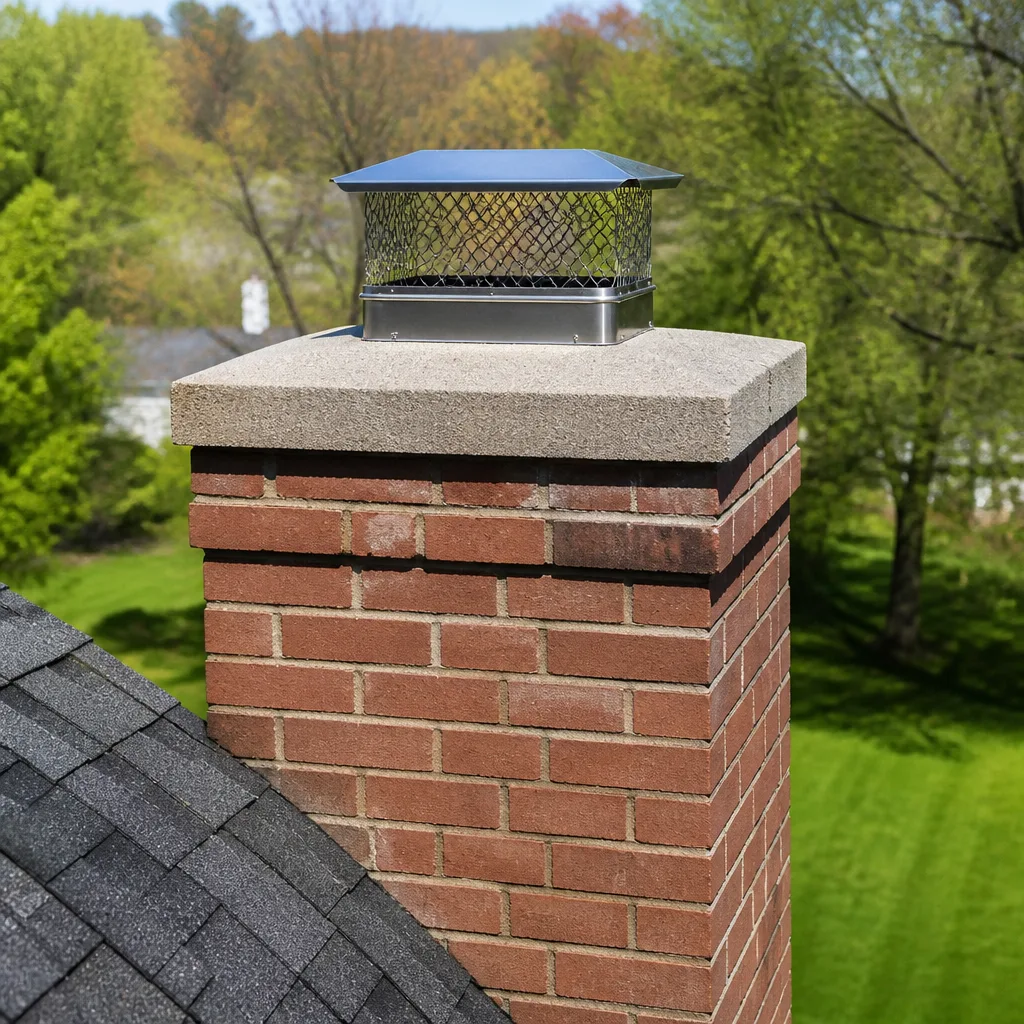
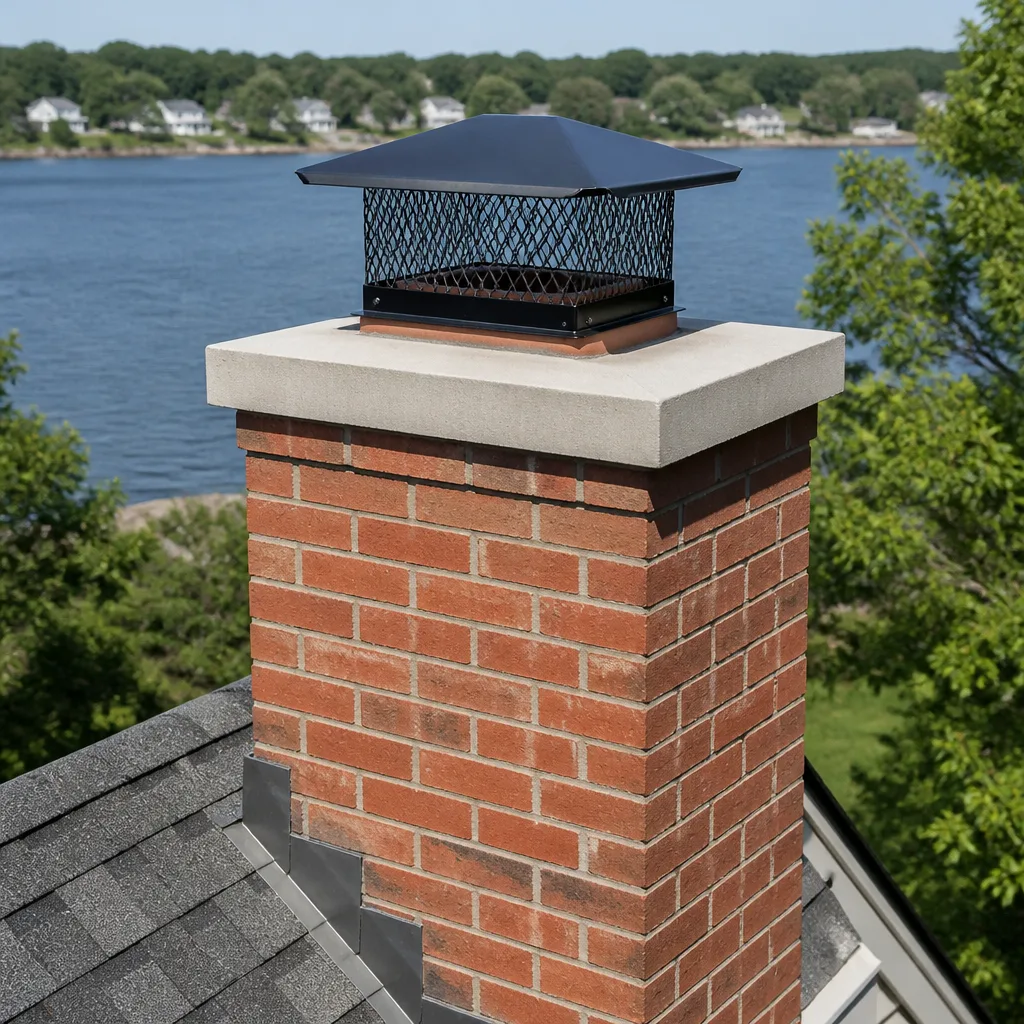
- Inspect the cap from the ground. Get a set of binoculars or a phone camera with zoom and look at the chimney cap from the ground. Check for a missing cap, a rusted screen, or a bird’s nest blocking the opening. You can see enough to know something is off – you don’t need to climb a roof.
- Check for visible creosote at the firebox opening. A flashlight up the flue will show the lower section. If you see more than a thin grey soot layer – especially anything black, shiny, or crusty – that’s the point where a professional needs to look.
- Watch for smoke spill-back. Close the doors or screen and burn a small fire. If smoke rolls back into the room instead of drafting up, that’s a draft problem, and a draft problem is a professional diagnosis.
What’s not on this list: climbing the roof to brush from the top, disassembling the damper, or anything involving a liner. Roof work is where homeowner injuries happen. If the job requires a ladder, it’s a professional job.
If you have any doubt about what you’re seeing, our team is happy to look. We connect South Fulton homeowners with experienced local professionals who can sort out a real problem from a non-issue.
The Break-Even Calculation: When DIY Saves Money and When It Doesn’t
The DIY vs professional cleaning calculus comes down to what a missed diagnosis costs. Here’s how to think about it honestly.
DIY wins when:
- You burn occasionally (a few fires a season), your flue is in known good shape from a prior inspection, and you’re removing light soot.
- You’re doing a pre-season or post-season touch-up on a flue that was professionally inspected within the last couple of years.
- You’re clearing debris from the firebox and checking the damper – routine upkeep, no diagnosis required.
Professional cleaning wins when:
- You burn regularly through the season, and especially if you burn unseasoned wood or burn the damper closed – both drive faster creosote formation.
- You’ve never had the flue inspected, or you don’t know the last inspection date.
- You see or suspect stage-2 or stage-3 creosote.
- You have any smoke spill-back, draft issue, or visible liner concern.
- You want the documentation for insurance and resale.
Here’s the math that matters: a professional sweep is a routine cost. A missed liner crack that lets carbon monoxide into living space, or a glazed creosote layer that ignites into a chimney fire, is a much larger cost – sometimes a full reline, sometimes more. When you factor in what a diagnosis catches, professional cleaning is the cheaper option in most South Fulton homes. The estimate is free; the price of a sweep is set by the written estimate, and there’s no fee to find out.
If you burn regularly, book the professional sweep. If you burn rarely and know your flue is sound, DIY is reasonable between professional inspections. The line is whether you can see the problem – and most of the time, you can’t.
What a Professional Sweep and Inspection Actually Involves
A professional visit is more than a cleaning. Here’s what the sequence typically looks like, so you know what you’re getting.
- Visual exterior and interior assessment. Before any tools come out, we look at the firebox, damper, smoke chamber, and chimney exterior. The visible condition tells us what to focus on.
- Camera scan of the flue. A flue camera runs the full height of the flue to document liner condition, tile joints, and deposit level. This is the step that catches what a brush can’t see.
- Mechanical cleaning. We match the cleaning method to the deposit – a standard brush for stage-1 soot, rotary equipment for stage-2 and stage-3 creosote. We use products from Gelco, Olympia Chimney, Famco, and Copperfield where the job calls for it.
- Debris removal and cleanup. Soot and debris go into sealed containers and come out with us. Drop cloths protect the hearth and floor.
- Post-cleaning assessment and photo documentation. After cleaning, we photograph the flue condition and document what we found. You get a copy.
- Repair recommendation, if needed. If the camera revealed a defect – a cracked tile, a failed joint, a compromised liner – we recommend the fix and tell you plainly when it can wait and when it can’t.
If something needs repair, we handle it in-house – sweeping, inspection, and repair are all part of what we do. If relining is the right answer, we use a stainless flexible liner system. If the liner can be restored, we use a ceramic resurfacing system. The point is that you don’t have to call a second contractor to find out what the fix costs.
Why South Fulton Chimneys Age the Way They Do
Chimneys age based on how they’re used, what they’re venting, and the climate they sit in. In South Fulton, that combination has some specifics worth knowing.
The burning season in South Fulton runs long and warm – often starting in late October and stretching into March or beyond, with long stretches of mild weather between cold snaps. That pattern matters for creosote. A chimney that heats up, cools down, heats up again through a long season tends to build and cure deposits in stages, which is exactly how glazed creosote forms. Homes that burn through a short, cold season in a colder climate often see more uniform soot; South Fulton homes see more of the hardened, tar-like variety.
The other factor is humidity. South Fulton summers are humid, and a chimney that sits unused from spring to fall draws moisture that can degrade masonry over time – especially if the cap is damaged or missing. Modern construction in the Cedar Grove, Sandtown, and Wolf Creek areas of South Fulton often includes manufactured fireplaces and stainless liners rather than traditional masonry; those have different care needs than an older masonry chimney. Older masonry chimneys in communities like Old National and Rivertown have their own issues – primarily mortar joint deterioration and flue tile cracking, both of which a camera scan catches and a brush pass doesn’t.
For a look at how this plays out in the local market, see our South Fulton service area page. If you want the broader picture of Valor Chimney Cleaning’s approach, you can read more on our Valor Chimney Cleaning homepage. And if you’re unsure whether you need a sweep or a repair, the place to start is a conversation.
Common Mistakes to Avoid
- Assuming a clean-looking firebox means a clean flue. The firebox is the one part of the system you can see. The creosote that starts fires is almost always above it, above the damper, or in the smoke chamber. A clean firebox tells you nothing about the flue.
- Brushing over glazed creosote and calling it done. A brush pass over stage-3 creosote skips over the top of it. It looks like you cleaned, and it isn’t clean. If the deposit is shiny and hard, stop brushing and get a professional assessment.
- Cleaning without inspecting. A sweep and an inspection are two different things. Cleaning without inspection removes soot but doesn’t find the cracked tile or failed joint that’s the actual safety risk. In South Fulton, where masonry chimneys are common, the inspection is the more valuable half.
- Skipping the camera scan. The camera scan is the part of a professional visit that finds hidden problems. If you’re going to pay for professional work, make sure the scan is part of it. Without the scan, you’re paying for a cleaning and not getting the diagnosis.
- Using a drill-mounted brush without control. Rotary cleaning heads are professional tools. Used on the wrong flue material without technique, they can score tiles and damage liners. This is one of the relatively few DIY chimney mistakes that can turn a routine cleaning into a repair.
- Burning unseasoned wood to “get the creosote off.” Wet or green wood burns cooler and produces more creosote, not less. It’s a common belief and it’s backwards. Seasoned, dry wood is the best creosote preventive there is.
- Ignoring the cap. A missing or damaged cap lets rain, birds, and debris into the flue. In South Fulton’s humid summers, moisture intrusion is one of the leading causes of masonry deterioration. Checking the cap from the ground takes a minute.
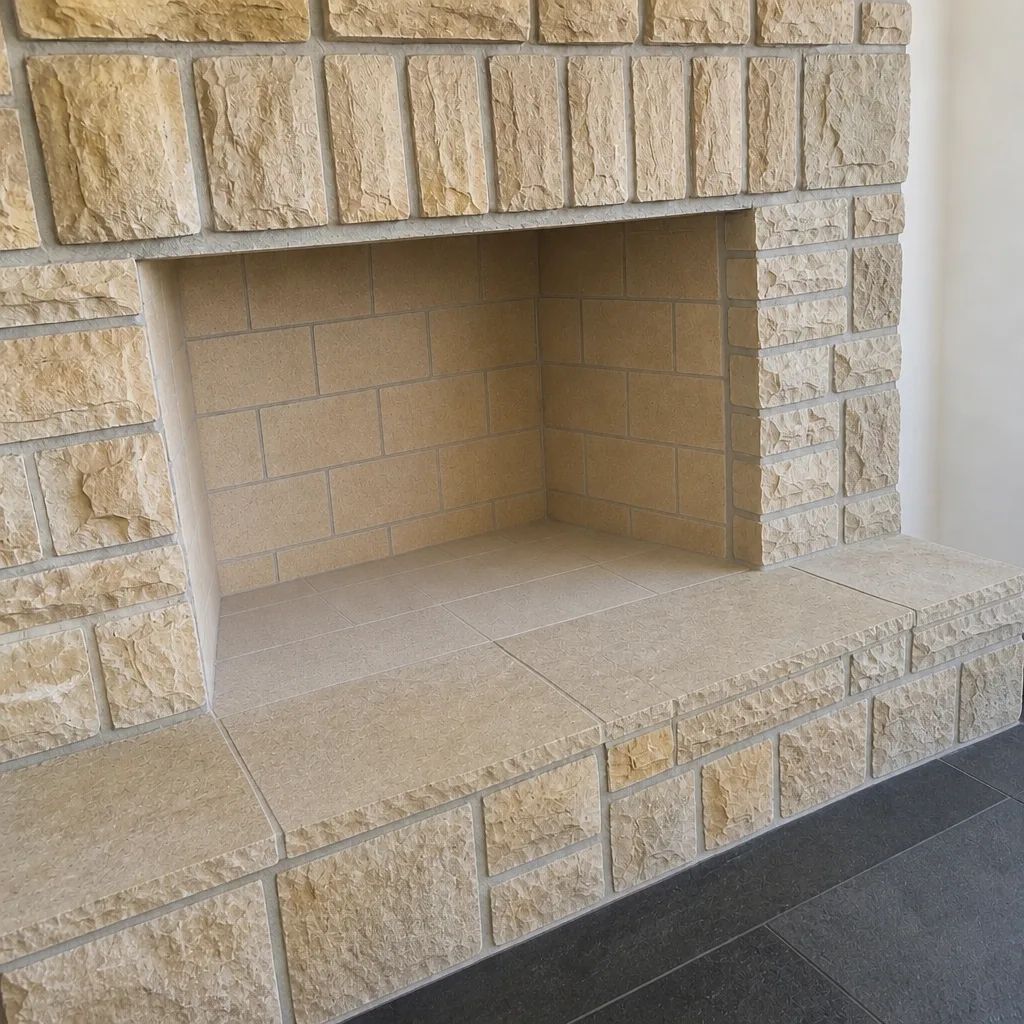
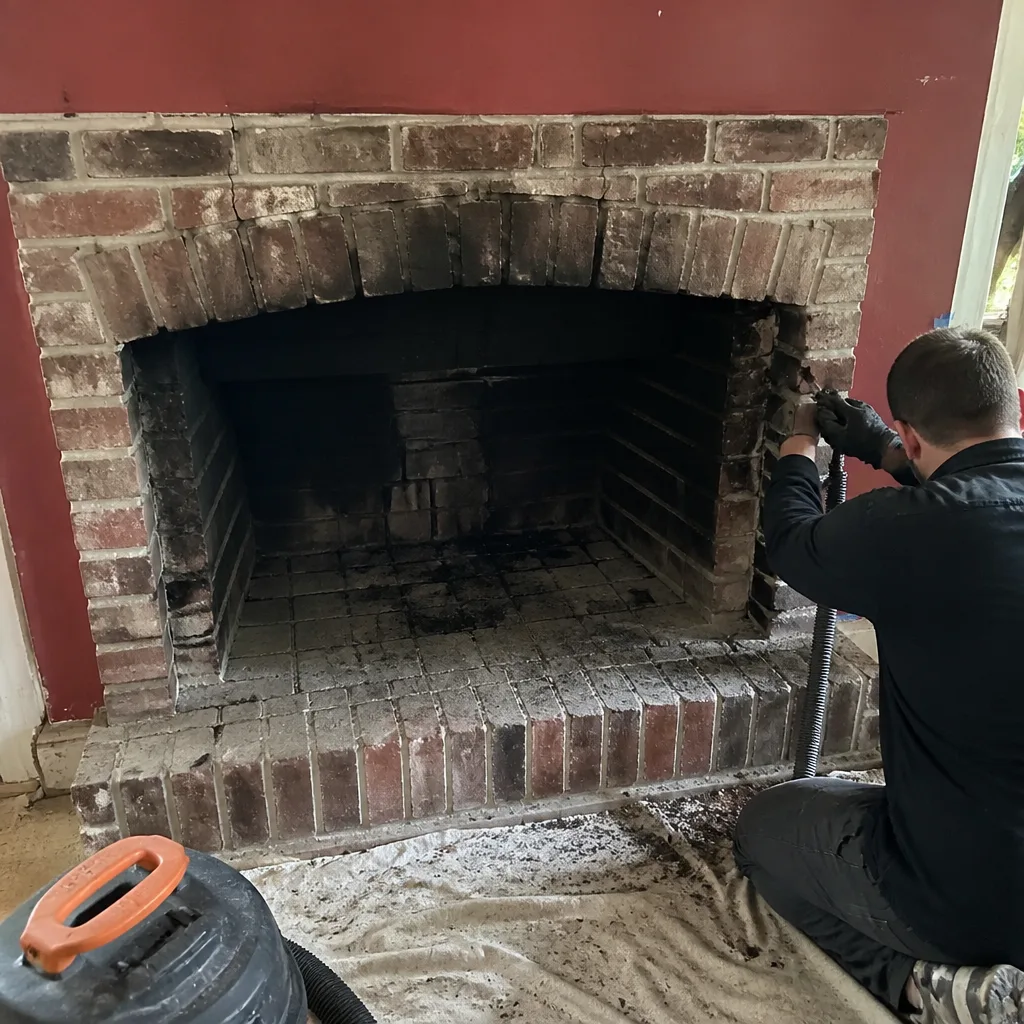
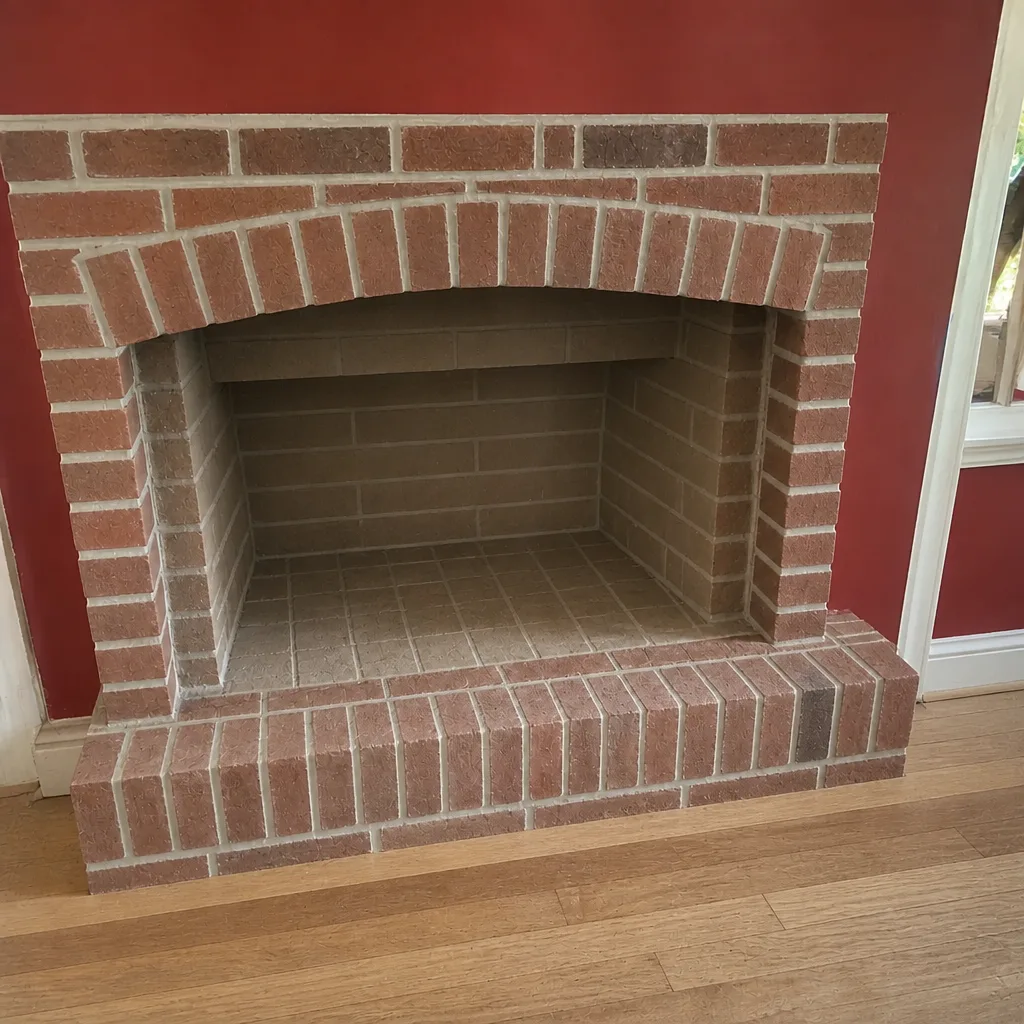
See the difference
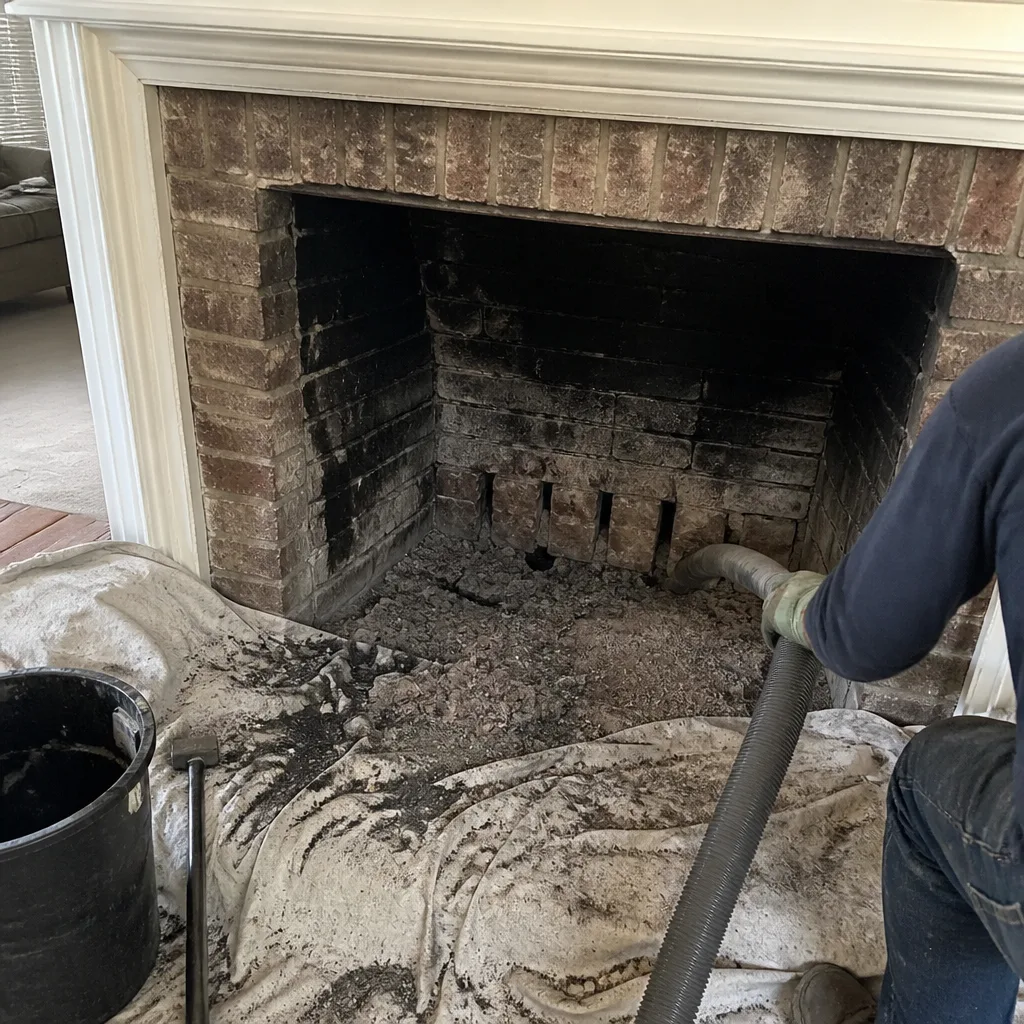 Before
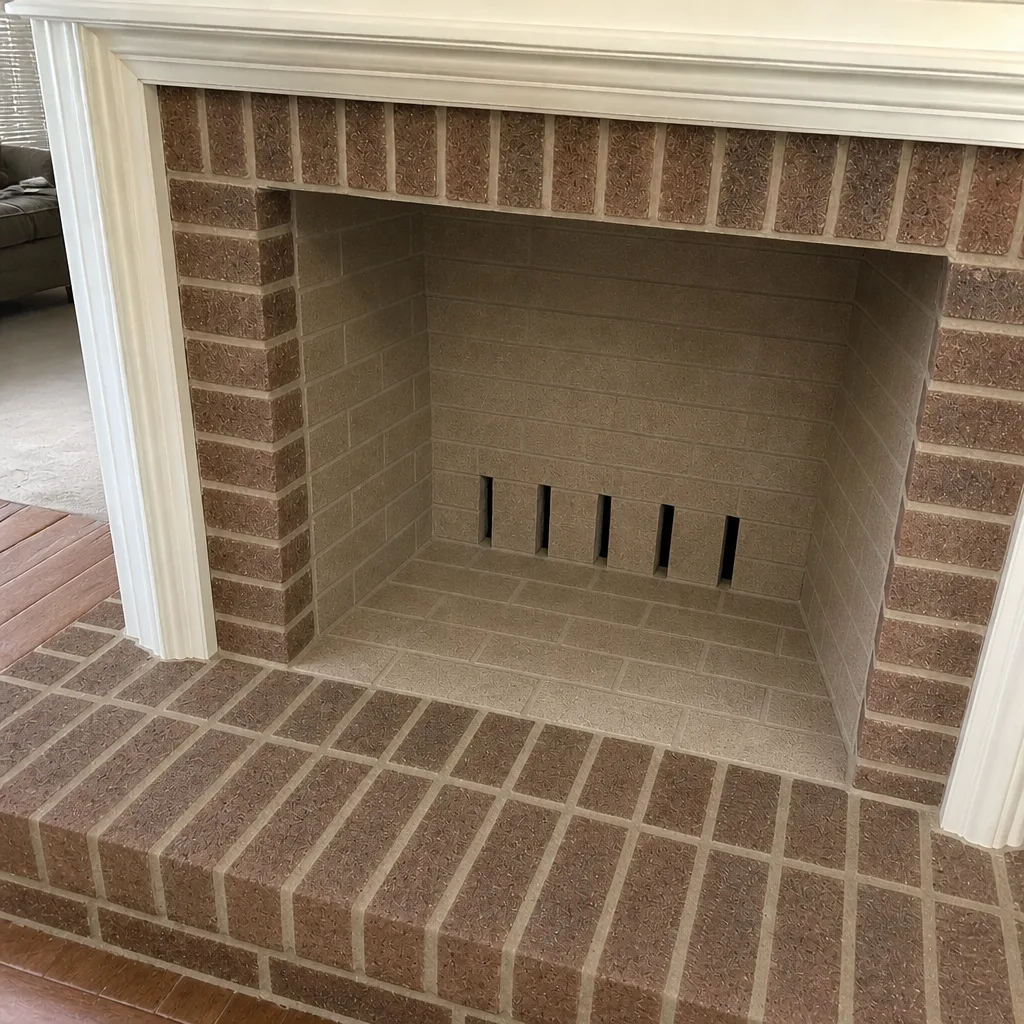 After
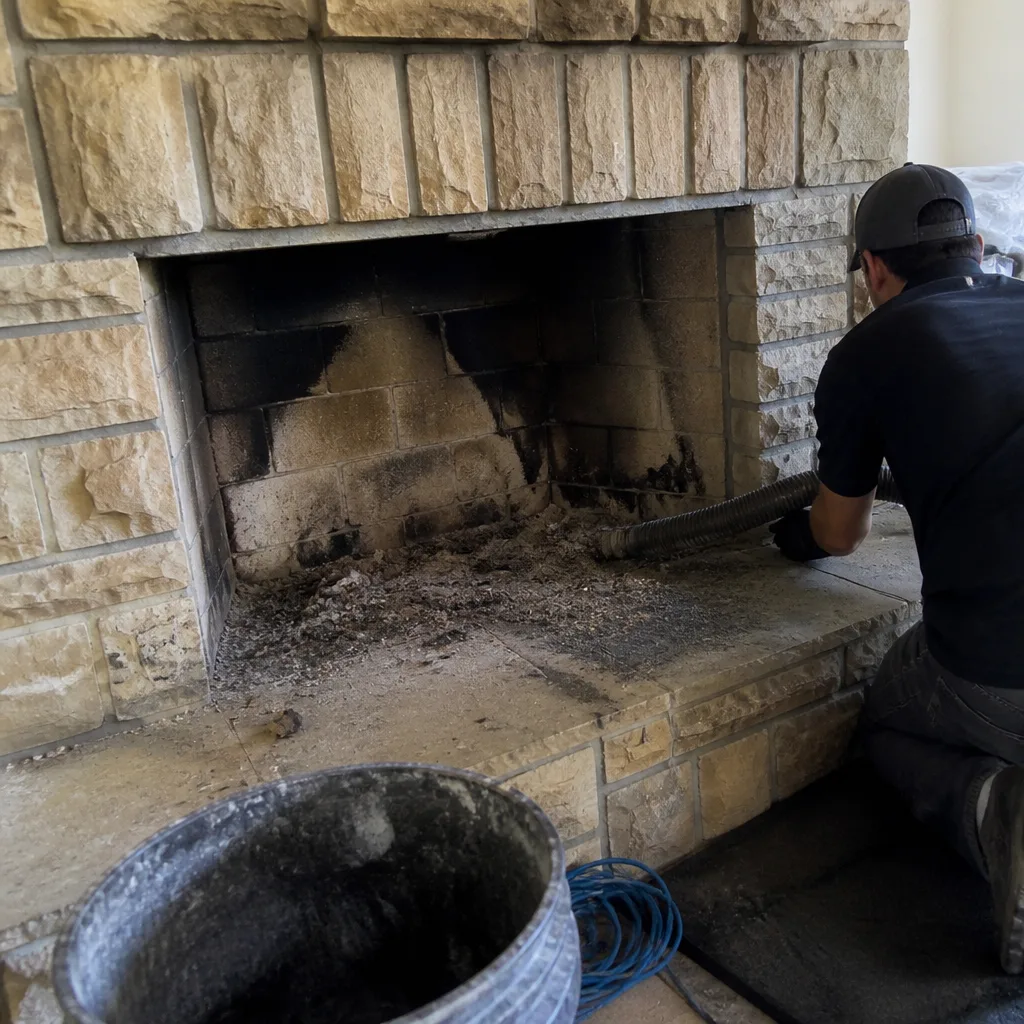 Before
 After
 Before
 After
When to Call a Professional
Some chimneys call for a professional from the start. If you’ve never had the flue inspected, book one – it’s the baseline. If your fire produces smoke spill-back, if you’ve seen any stage-2 or stage-3 creosote, if you’ve burnt through more than two seasons without a sweep, or if you plan to sell the home, professional service is the right call. If you have a wood stove or a fuel-burning heating appliance, the stakes are higher, and the flue should be inspected every year by a professional. If you ever suspect a chimney fire has happened – even a small one – that’s a professional assessment before the chimney is used again. Valor Chimney Cleaning offers free estimates in South Fulton – call (888) 268-0915. Our technicians have up to 9 years of experience, and we answer 24/7.
Frequently Asked Questions
Most wood-burning chimneys should be swept once a year, and more often if you burn heavily or burn unseasoned wood. A chimney that’s used regularly through South Fulton’s long burning season benefits from an annual sweep and inspection. The sweep removes deposits; the inspection catches the condition issues the sweep can’t see. If it’s been more than a year, call (888) 268-0915 for a free estimate.
You can remove light soot and stage-1 creosote yourself if you know the flue is sound from a recent inspection. What you can’t do is remove stage-2 or stage-3 creosote, inspect the flue with a camera, or produce documentation for insurance. If your flue has never been inspected, or you’ve seen glazed deposits, professional cleaning is the right call. If you’re not sure what you’re looking at, call (888) 268-0915 and we’ll help you sort it out. Estimates are free.
The price of a sweep is set by the written estimate, which depends on the condition of the flue and the services needed. We give you the estimate before we book the job, and the estimate is free. A routine sweep costs less than a repair that a missed diagnosis creates. Call (888) 268-0915 for an exact quote – estimates are free.
Not always. A liner recommendation depends on what the camera scan shows – a cracked tile, a failed joint, or a compromised liner. Sometimes the liner can be restored rather than replaced. We never recommend a new liner without camera evidence you can see yourself, and we’ll tell you plainly if the repair can safely wait. Call (888) 268-0915 to set up an inspection.
Creosote builds up in stages, and the hardened stages are the ones that ignite. Skipping the sweep means those deposits have more seasons to cure. It also means you don’t find a cracked tile or a failing liner until the problem is larger. Carbon monoxide and chimney fire risk both rise with unaddressed deposit and flue defects. Call (888) 268-0915 to book a sweep and inspection; the estimate is free.
Coverage depends on whether the chimney was reasonably maintained, and documentation matters. An inspection record from a professional documents flue condition, which supports your side of a claim. A self-performed cleaning without any inspection record leaves the question open. We can work with your insurer, and we provide the inspection documentation you’ll need. Call (888) 268-0915 to schedule an inspection.
The Bottom Line
The DIY vs professional debate comes down to what you can see and what you can’t. A homeowner can remove light soot, check the damper, clear the firebox, and inspect the cap from the ground. What a homeowner can’t do is remove hardened or glazed creosote, scan the flue with a camera, or produce an inspection record. In most South Fulton homes, the deposits that cause chimney fires and carbon monoxide problems live in exactly that invisible territory. If your flue has been inspected recently and you burn lightly, DIY between professional inspections is reasonable. Otherwise, book the sweep. Valor Chimney Cleaning handles sweeping, inspection, and repair, and our technicians have up to 9 years of experience.
Call (888) 268-0915 for a free estimate. We answer 24/7. Fast dispatch, 7am-7pm, Sunday through Friday.
Written by the team at Valor Chimney Cleaning.