
Last updated November 16, 2026
 Sweep & inspection
 Caps & crowns
 Flue relining
 Masonry repair
 Gas fireplace service
Level 1 sweep and inspection to the NFPA 211 annual standard - flue, crown, cap, and flashing checked and photographed
Chimney sweep logs do not sweep chimneys. They loosen some creosote - which then falls where a brush and vacuum still have to collect it.
Chimney Cleaning Warning Signs: A South Fulton Homeowner’s Reference Guide
A smoky smell in a room with no fire burning isn’t a minor nuisance. It’s a pressure and draft problem, and it tells a trained professional exactly where to look inside your flue system. That’s the part most homeowners miss: chimney problems rarely announce themselves with flames. They announce themselves with a smell, a stain, a cold draft, or a fire that suddenly takes three tries to light. This guide explains what each of those signals actually means at a mechanical level – not just that you should call someone, but what the symptom is telling you about creosote, moisture, draft, or masonry. You’ll learn how to read your own chimney before you pick up the phone, and how to describe what you’re seeing so a sweep in South Fulton can diagnose the issue before arriving.
Quick Answer
The main chimney cleaning warning signs are a persistent smoky or acrid smell with no fire burning, white or dark staining on exterior brick, a white haze inside the firebox, smoke spilling back into the room, a fire that’s hard to start or burns slowly, and visible creosote buildup in the flue. Any one of these is reason enough to book an inspection and cleaning, and two or more together usually point to a draft, moisture, or creosote problem that has been building for a while. At minimum, most wood-burning chimneys need sweeping once a year or after roughly a cord of wood.
Styles & brands we work with
- Sweep & inspection
- Caps & crowns
- Flue relining
- Masonry repair
- Gas fireplace service
Table of Contents
- What Do Chimney Odors Tell You?
- How to Read Exterior Brick: Efflorescence, Spalling, and Staining
- White Haze vs. Black Streaking Inside the Firebox
- Draft and Backdraft Warning Signs You Can Feel
- Understanding Creosote Grades and Fire Risk
- Why South Fulton’s Humidity and Season Length Matter
- How to Log Warning Signs Before You Call
- When to Sweep: Frequency Signs vs. Calendar Signs
What Do Chimney Odors Tell You?
Odors are the earliest and most specific warning sign your chimney gives you, and different smells point at different problems. Musty, earthy odor means moisture is getting into the flue or masonry and staying there. A sharp, acrid smell in warm weather is usually creosote off-gassing as humidity rises. A sulfur-like or rotten smell often means an animal has gotten into the flue, or points to a gas appliance issue you should have checked right away. Learning to tell these apart is one of the most useful things a homeowner can do.
Musty or Damp Smell
A musty chimney smell means moisture intrusion – water is entering somewhere and being held in masonry, liner, or the ash bed. In South Fulton, where summers are long and humid and afternoon storms come hard, this is one of the most common things we find on an inspection. Standing water, a missing or damaged rain cap, or cracked crown mortar all let water in. Left alone, moisture drives spalling and rusted dampers.
Acrid or Sharp Smell (Usually Warm Weather)
That sharp creosote smell you notice on the first warm day of spring is creosote off-gassing. Creosote is a residue left by wood smoke, and it becomes more volatile as temperatures and humidity rise. Here’s the part homeowners don’t realize: the smell can be strong even when the flue isn’t heavily loaded. It means the residue is present and reacting to the air, and it’s a clear reason to get the flue evaluated before next burning season.
Sulfur or Rotten Smell
A sulfur or rotten-egg odor needs immediate attention. It usually means an animal has nested or died in the flue, but it can also point to a gas appliance or venting problem. Don’t burn a fire with this smell present, and call a professional to identify the source. Animal intrusion in a South Fulton chimney often shows up along with a damaged cap or a loosened top plate.
How to Read Exterior Brick: Efflorescence, Spalling, and Staining
The outside of your chimney is a moisture report card, and learning to read it takes one trip outside with a flashlight. Efflorescence, spalling, and staining are three separate problems that describe three different stages of water exposure. Efflorescence is a white powdery salt deposit that means water is moving through the brick. Spalling is when brick faces begin flaking or popping off, which means the bricks are saturated. Staining – dark or green or rust-colored – means persistent moisture is collecting in one area. They’re not the same, and they don’t have the same urgency.
- Efflorescence: White, chalky film on the surface. Salts have been drawn out as water evaporates. It’s the earliest sign of water movement and usually responds to fixing the water source – a crown, cap, or flashing issue.
- Spalling: Brick faces flaking, cracking, or popping off. The brick has absorbed water and is failing from the inside. This is more serious and usually means the masonry needs repair, not just sealing.
- Staining: Rust-colored, dark, or green patches. Rust stains often mean a metal component – a damper, a cap, or flashing – is corroding. Green staining can indicate algae or long-term dampness.
Walk to the base of the chimney on a dry day and look at the whole face of it, not just eye level. In South Fulton, the summer storm cycle means a chimney that looks fine in June can show efflorescence by August if the crown is cracked. Catching a white haze early is a cheap fix. Catching a crumbling joint after a season of freeze-thaw is a chimney repair job. For the outside inspection to mean something, you have to know what you’re looking at – and what a change means between visits.
White Haze vs. Black Streaking Inside the Firebox
Inside the firebox, a white haze and black streaking tell two different stories. A white haze or fluffy white residue – sometimes dusting the firebox walls or the damper – usually means moisture reacting with the acids in flue gas, or indicates that the chimney is being run cold with inefficient burns. Black, shiny streaking is glaze creosote, a sign the fire was too cool for the wood being burned or the flue was too cold to draft cleanly. One points to moisture and burning habits; the other points to fire risk. They shouldn’t be treated as the same thing.
White Haze and Efflorescence Inside the Firebox
A white, powdery haze inside the firebox is often the same efflorescence reaction you see outside – water moving through the masonry and leaving salts behind. It can also be a sign that unburned gases are condensing on cooler surfaces. Either way, it’s a reason to inspect the flue and the smoke chamber for leaks and to check that the firebox isn’t sustaining hidden moisture damage. In a humid climate like South Fulton’s, that white haze deserves a second look.
Black Streaking and Glaze
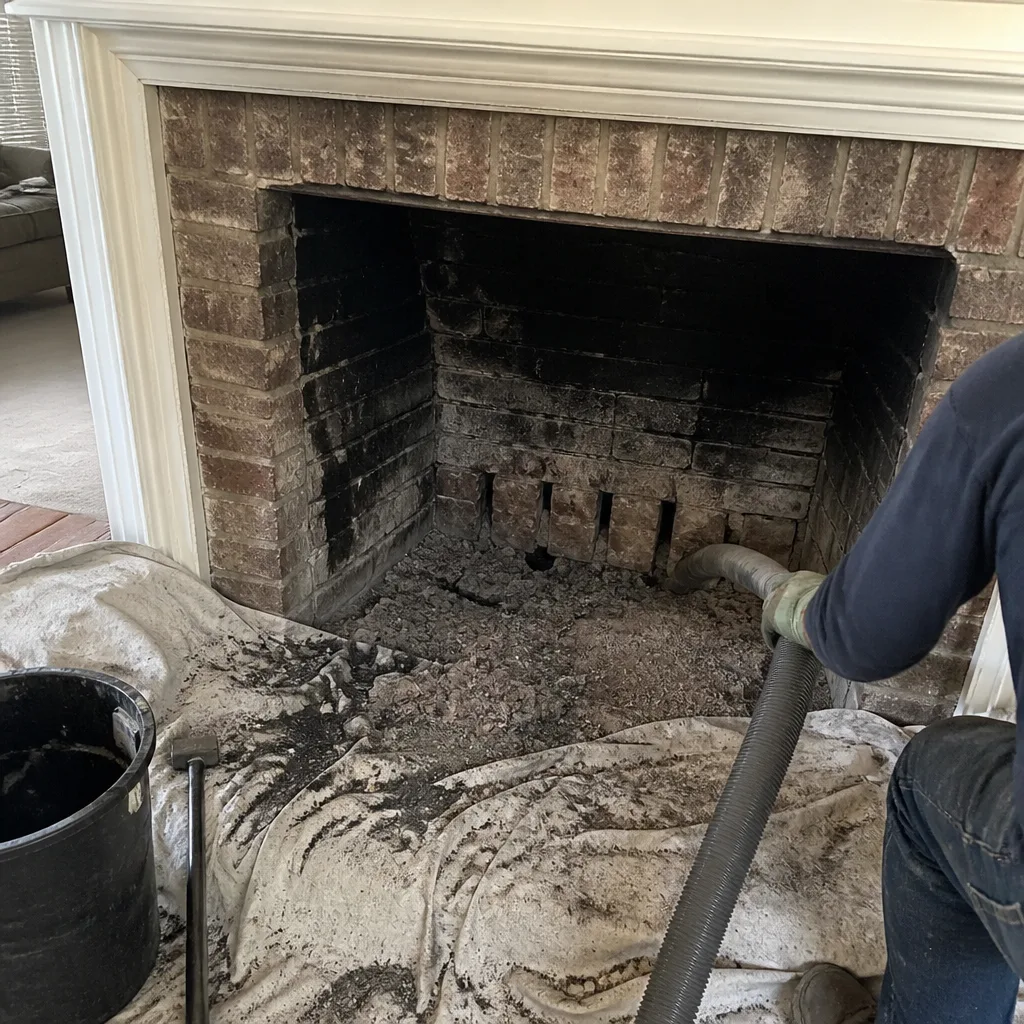
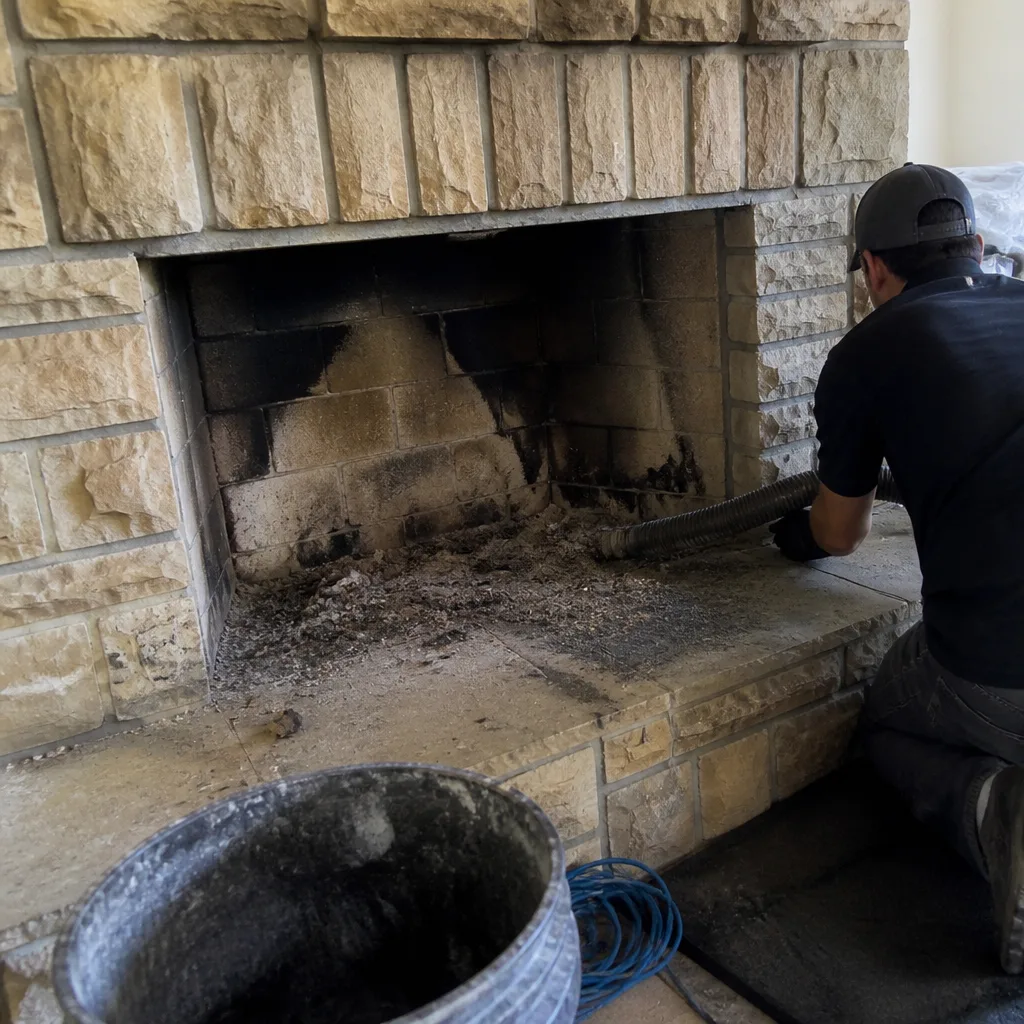
Black streaks running up the firebox walls and into the smoke chamber are creosote streaks. When the residue looks shiny, glassy, or like a varnish, that’s glaze creosote – the most concentrated and most flammable form. It’s also the hardest to remove. It signals that your fire isn’t burning hot enough to be clean, usually because the wood is not fully seasoned or the flue is undersized for the appliance. Glaze creosote is the specific reason a sweep may want to schedule a return visit to remove it thoroughly rather than promise one pass.
Draft and Backdraft Warning Signs You Can Feel
Draft problems announce themselves by feel, not by sight, and most homeowners experience them without connecting them to the chimney. Cold air spilling out of the fireplace when there’s no fire, smoke reversing into the room on a cold start, a fire that’s slow to catch or wants to die – these are draft symptoms. A chimney that used to draw well and now doesn’t is behaving differently for a reason: a blocked flue, a dirty cap, negative pressure in the house, or a change in the liner’s condition.
- Cold air spilling from the firebox. With the damper open and no fire, cold air should not pour into the room. If it does, the chimney is acting as a cold-air return and the seal or the flue condition needs evaluation.
- Smoke reversing into the room. A puff of smoke on a cold start is normal. Smoke that spills persistently, or that comes back after the fire is lit, means the draft is failing. This is a safety signal – stop burning and get the flue inspected.
- A fire that struggles to start. A fire that used to light easily and now takes three attempts is telling you the draft is weak. That usually means a blockage, a damper not opening fully, or a flue that needs cleaning.
- Soot on the mantel or wall above the fireplace. Fine dark dust above the fireplace opening means smoke is spilling out of the firebox, not going up the flue.
- A downdraft on windy days. Wind pushing smoke back down the flue can mean a short chimney, a bad cap, or a flue that has lost draw capacity.
Any of these can be a chimney cleaning warning sign, and any of them can also be a venting, pressure, or appliance-sizing problem. That’s why an inspection first, not a sweep first, is the right starting point. A trained sweep will look at the full system – flue, cap, damper, smoke chamber, appliance connection – before deciding what work is actually needed. You can read more about what a Valor Chimney Cleaning inspection involves before you schedule one.
Understanding Creosote Grades and Fire Risk
Creosote is the residue left by wood smoke, and it doesn’t accumulate evenly. It builds in layers that are graded by appearance: soot or dust (first degree), black and crunchy (second degree), and shiny and glazed (third degree). The grade matters because it tells a sweep not just how much to remove but how hard the deposit is to remove and how much fire risk it carries. A flue with third-degree glaze creosote has a genuine fire hazard and usually takes more than a single cleaning pass to get fully clear.
What Each Creosote Grade Means
- First degree (soot). Fine, dusty, and easy to brush away. This is normal accumulation.
- Second degree (black, crunchy). Flaky or granular. Brushable, but it takes a proper rotary brush to remove fully.
- Third degree (glazed). Shiny, hardened, and varnish-like. This is the most flammable grade, and it’s the one most likely to catch fire during a hot burn.
Creosote buildup is why a sweep recommends sweeping once a year or after roughly a cord of wood, and why burning wet wood is hard on a chimney. Burning poorly seasoned wood produces more smoke, more residue, and more creosote. In our experience, a homeowner who occasionally gets a chimney fire and doesn’t know it – they hear a roar or a whoosh, see flames or sparks at the top – has usually let creosote build up between cleanings.
Chimney Fires Are Often Silent
Many chimney fires don’t announce themselves as a dramatic event. Low-intensity chimney fires burn quietly and can damage the flue without the homeowner knowing. The danger is that a cracked flue or damaged liner from a fire can vent smoke and carbon monoxide back into the house on the next burn. This is why a professional flue inspection – not just a brush and a look up the chimney – is the safety point. It’s why we work with professional-grade liner systems like chimney sweep service partners’ materials and repair systems, because a compromised flue needs a product rated for the job.
Why South Fulton’s Humidity and Season Length Matter
Chimney warning signs accumulate differently in South Fulton than in colder climates, and the local conditions you should factor in are humidity, storm intensity, and the length of the season. South Fulton’s summers are long and humid, and afternoon thunderstorms are frequent. That combination pushes constant moisture against the outside of every masonry chimney, and it forces moisture into any crack, joint, or crown that has opened up. The result is that efflorescence, spalling, and moisture-driven liner damage show up earlier here than in a dry climate, and they show up on chimneys that a homeowner thinks look fine.
The other local factor is the burn season. A South Fulton homeowner may burn wood from late fall into early spring, but the chimney has to hold up against twelve months of Georgia humidity when it’s not in use. That’s the window where a small crack in a crown or a missing cap becomes a moisture problem, and where a partially clogged flue full of residue sits and off-gasses. When you’re scheduling a South Fulton sweep, the goal is to get the flue evaluated before the next burn season, not after. Inspecting in late summer, before the first cool night, means a problem gets caught while the chimney can be repaired or relined without guesswork.
Building codes for chimneys and venting are set by local jurisdiction, so if you’re adding a stove, a new insert, or making repairs, ask your local building department about permits and current requirements. Most jurisdictions require permits for structural or liner changes, and a professional will know to ask. Our guide to the local area walks through the services available and the inspection schedule that matches our climate: South Fulton chimney experts.
How to Log Warning Signs Before You Call
Logging your chimney’s symptoms before you call makes the diagnosis faster and the estimate more accurate, and it costs nothing. The goal is a short written record: what you smelled, when, what it looked like, and how the fire behaved. A sweep who knows the symptom pattern can bring the right tools and give you a clearer answer. Here’s a simple way to build that record.
- Write down odors with time and weather. Note whether the smell is musty, acrid, or sulfur-like, and whether it shows up on a warm day, after rain, or when the fire is lit. That distinction matters.
- Photograph the exterior and the firebox. Take a dry-day photo of the exterior chimney and a photo looking up into the firebox and damper. Repeat the same angle after a season so you can compare.
- Record draft symptoms. Note cold air, smoke reversal, or slow starts, and whether it happens on cold mornings, on windy days, or all the time.
- Note your burn habits. What wood do you burn, how often, and how dry is it? Do you burn softwood or hardwood? Roughly how much do you go through in a season? That’s the creosote story.
- Note anything new. A new insert, a remodel, weatherization, or a new appliance can change pressure in the house and change how the chimney drafts.
When you hand a sweep a short list of symptoms, they can inspect the whole system – flue, cap, crown, damper, smoke chamber, masonry – with the pattern already in mind. That’s how a warning sign becomes a diagnosis, and it’s how a homeowner avoids paying for work that wasn’t needed or missing work that was. The same approach applies whether you’re scheduling a routine cleaning or a full inspection.
When to Sweep: Frequency Signs vs. Calendar Signs
A chimney should typically be swept once a year or after roughly a cord of wood, but the frequency rule isn’t the only trigger. There are calendar signs and there are symptom signs, and the symptom signs often come first. If you’ve noticed a musty smell, a black streak in the firebox, or a fire that isn’t drawing, you don’t wait for the calendar – you call for an inspection. The annual rule is a floor, not a ceiling, and it’s meant for a chimney that’s behaving normally.
- Sweep once a year or after about a cord of wood if you burn regularly and the chimney has been drawing well.
- Book an inspection whenever a warning sign appears – odor, staining, draft reversal, or visible creosote.
- Book before adding an appliance or insert. A new stove or insert changes draft and sizing, and the flue needs to be evaluated against it.
- Book after any event you suspect was a chimney fire – a roar, a whoosh, or sparks at the top – even if it seemed brief.
- Book before the next burn season if you haven’t had the flue looked at, particularly in a humid climate.
One thing we’re clear about: a cleaning is never cosmetic. An inspection that includes a visual assessment of the flue condition is what tells a homeowner whether the warning sign is minor or urgent. That’s the standard our chimney inspections follow: a proper evaluation before any work is recommended, and the parts of the system checked that a homeowner can’t see. When it’s time, a sweep can tell you what the flue actually looks like and what, if anything, needs doing.
Common Mistakes to Avoid
- Ignoring the smell because the fire still works. A musty or acrid smell is often the first symptom, and waiting until the fire stops drafting means the moisture or residue has had a full season to build.
- Treating a cold firebox as normal. Cold air spilling from the fireplace with no fire burning is a draft signal, not a quirk of the house, and it often points to a flue or pressure issue worth checking.
- Burning wet or unseasoned wood to save money. Wet wood makes more smoke and more creosote, and it’s the most common reason a flue ends up with glaze creosote ahead of schedule. Dry wood burns hot and leaves less behind.
- Assuming a sweep and an inspection are the same thing. A sweep brushes the flue; an inspection evaluates the flue, cap, crown, damper, and masonry condition. A symptom like a persistent smell or a stain needs the inspection, not just the brush.
- Patching a spalled chimney with sealer and calling it fixed. Sealer on saturated brick traps moisture inside. The water source – a crown, cap, or flashing – needs to be found and fixed first.
- Waiting for the calendar when the symptoms say now. The annual rule is for a chimney that’s behaving. A symptom shows up, you should call, not wait for next year’s sweep.
- Not logging what you see. A photo and a short note on the smell and the draft make the diagnosis faster and help you know if the problem is getting worse between visits.
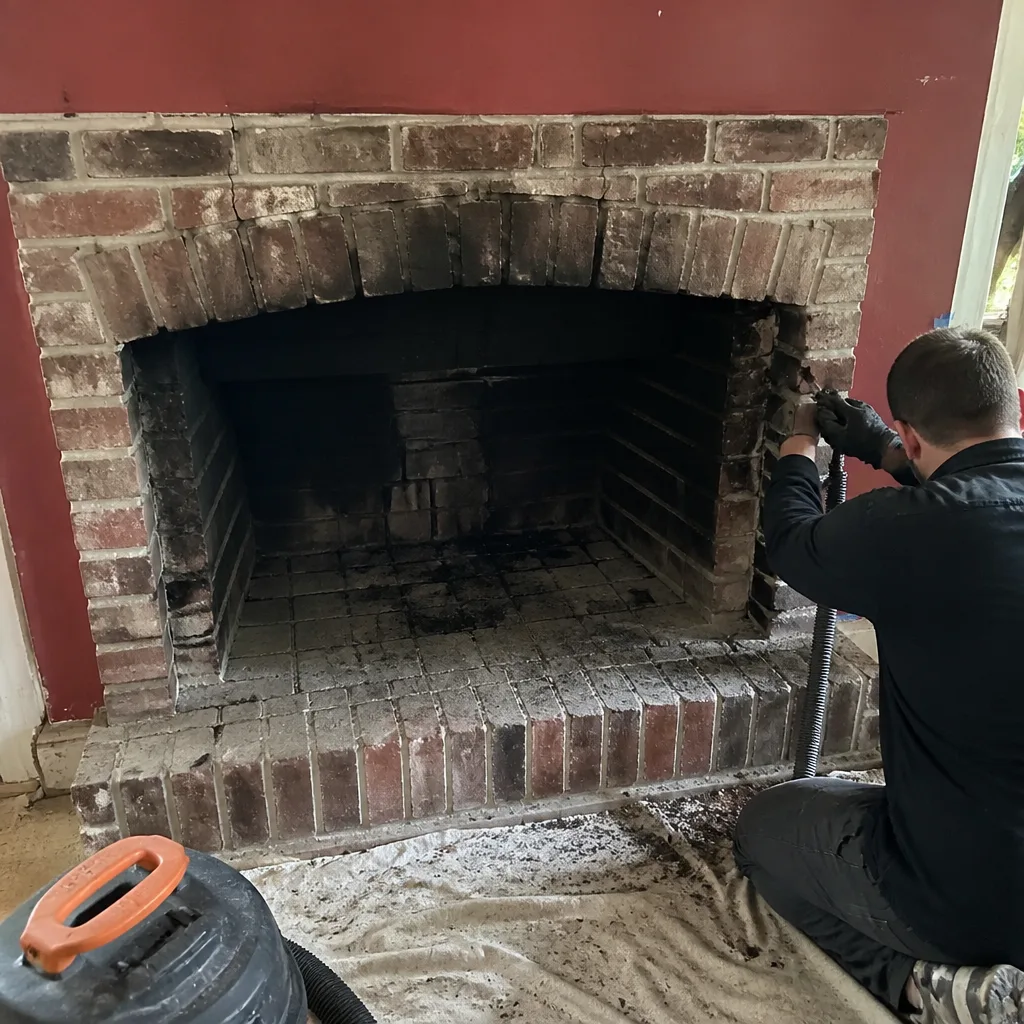
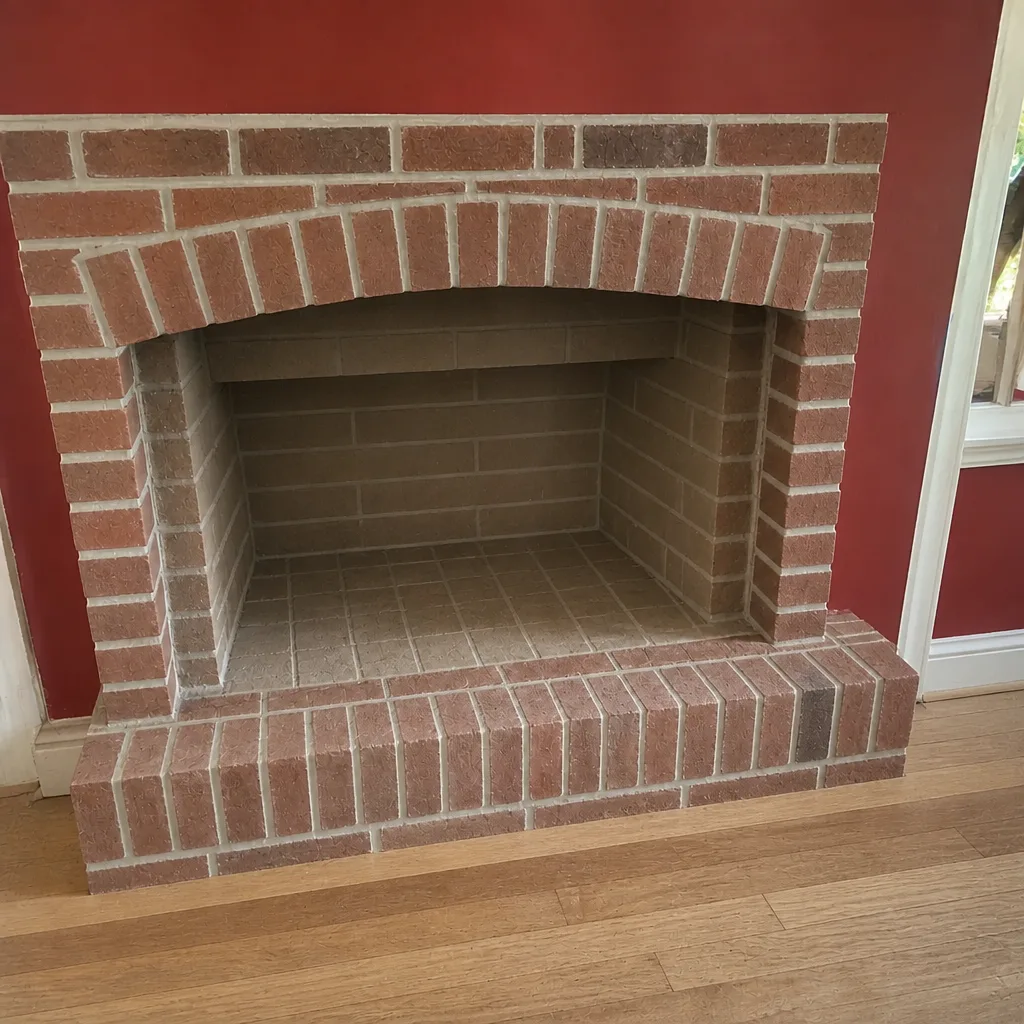
See the difference
 Before
 After
 Before
 After
 Before
 After
When to Call a Professional
Call a professional for any of these: a sulfur or rotten smell, smoke spilling persistently into the room, a suspicion of a chimney fire, visible glaze creosote, a white haze or black streaking that’s spread, spalling brick, or a chimney that used to draft well and now doesn’t. Also call before adding an insert or stove, and before the next burn season if the flue hasn’t been evaluated. A professional can inspect the parts of the system you can’t reach and tell you what the warning sign actually means. If the sign is minor, they’ll say so. If it isn’t, they can handle the repair themselves – no handoff to a second contractor. Valor Chimney Cleaning offers free estimates in South Fulton – call (888) 268-0915. We answer 24/7. Fast dispatch from 7am to 7pm, Sunday through Friday.
Frequently Asked Questions
Odor is the most common early warning sign we run into, and in this climate it’s usually a musty smell from moisture intrusion or an acrid creosote smell that shows up in warm, humid weather. It’s easy to dismiss because the fireplace still works, but the smell is usually telling you about a water entry point or a residue load that’s already present. A quick inspection confirms which one it is.
You can buy a brush and a rod, but you can’t safely evaluate the flue, the cap, the crown, the damper, or the smoke chamber from inside the firebox, and those are the parts where real problems hide. A sweep has the tools to see the full system and the knowledge to know what a good flue looks like. If you suspect a blockage, a creosote buildup, or a draft problem, the flue should be evaluated by a professional.
A smoky smell with no fire is not itself a fire hazard, but it’s a reliable warning that something is wrong – usually moisture intrusion or creosote off-gassing as humidity rises. It’s the signal to get the flue evaluated before the next burning season, not a reason to ignore it. The key is to find out which of the two it is.
Efflorescence is a white, powdery film of salts left behind as water evaporates – it’s the early sign that water is moving through the brick. Spalling is when the brick face itself flakes or pops off, meaning the brick is saturated and failing. Efflorescence often responds to fixing the water source; spalling usually means masonry repair.
Typically once a year or after roughly a cord of wood, whichever comes first, for a chimney that’s burning normally. Because South Fulton’s humidity and long season can drive moisture problems on the exterior, and residue buildup on the inside, an annual inspection is the practical baseline. If you notice an odor, a stain, or a draft problem, book sooner.
Glaze creosote looks shiny, glassy, and varnish-like on the flue walls. It’s the most concentrated and flammable form of creosote, which makes it a genuine fire risk during a hot burn. It’s also the hardest to remove, so a sweep may schedule a return visit rather than clear it in one pass. If you can see it, book an inspection and don’t wait for the next season.
The Bottom Line
Warning signs come well before a failure, and they come in a specific order: odor first, then exterior staining, then visible creosote and draft problems. The important thing is to read them correctly. A musty smell is moisture, an acrid smell is creosote, a sulfur smell is animal intrusion or a gas issue, and a smoky smell with no fire is a draft problem. White haze and black streaking are different problems; efflorescence and spalling are different stages of water damage. Log what you see and smell, and book an inspection before the next burn season. A clean chimney is a safe chimney, and the right time to check is before you’re relying on it. Call (888) 268-0915 for a free estimate. We answer 24/7. Fast dispatch from 7am to 7pm, Sunday through Friday.
Written by the team at Valor Chimney Cleaning.